Shopping Cart
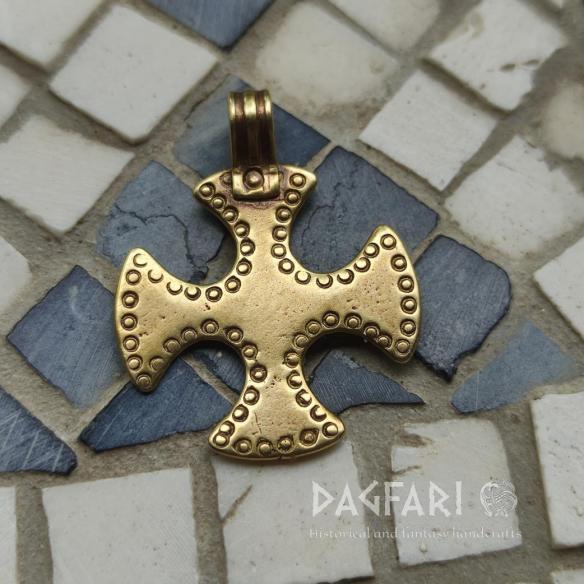
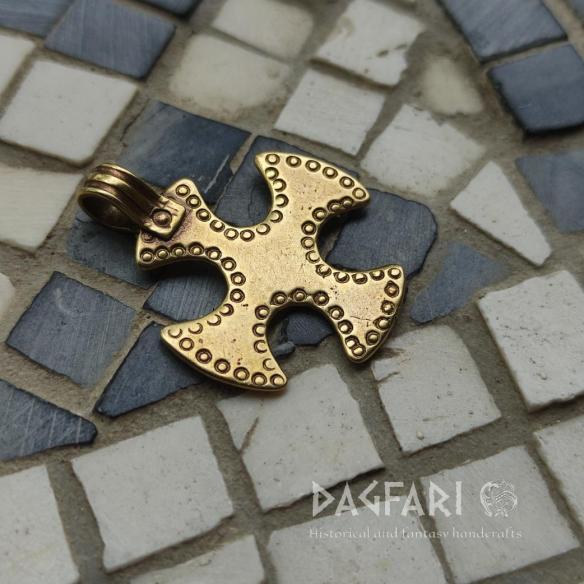
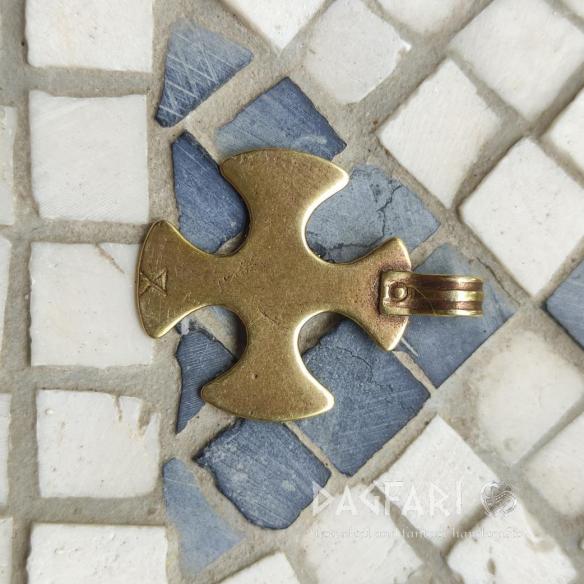
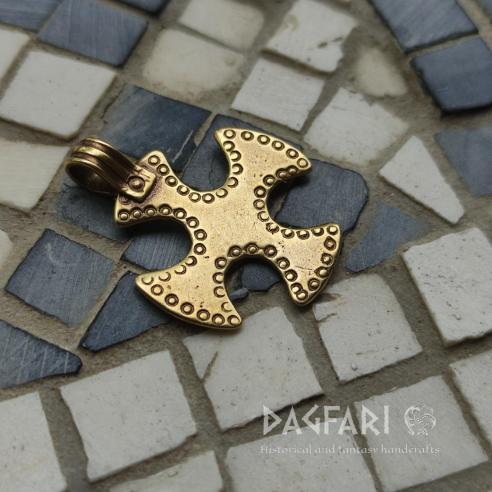
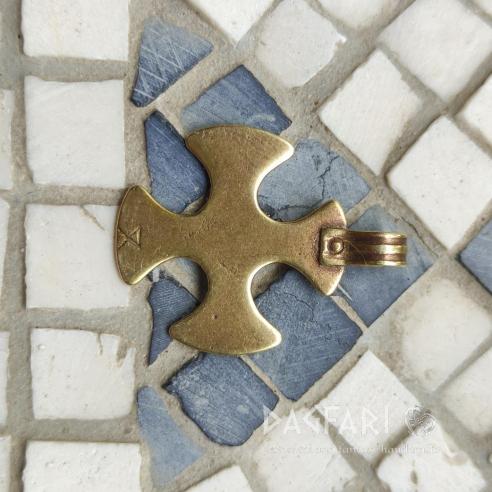


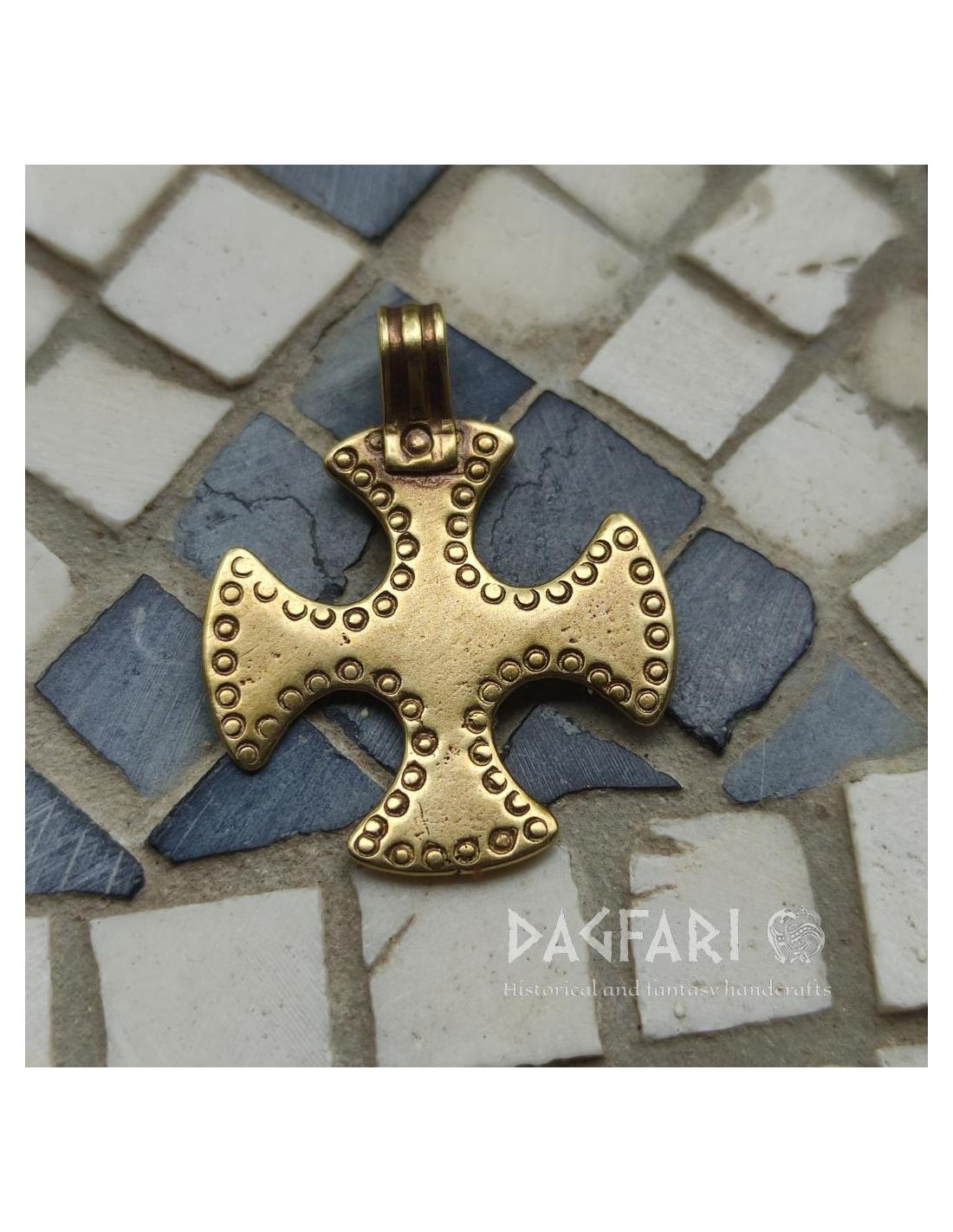
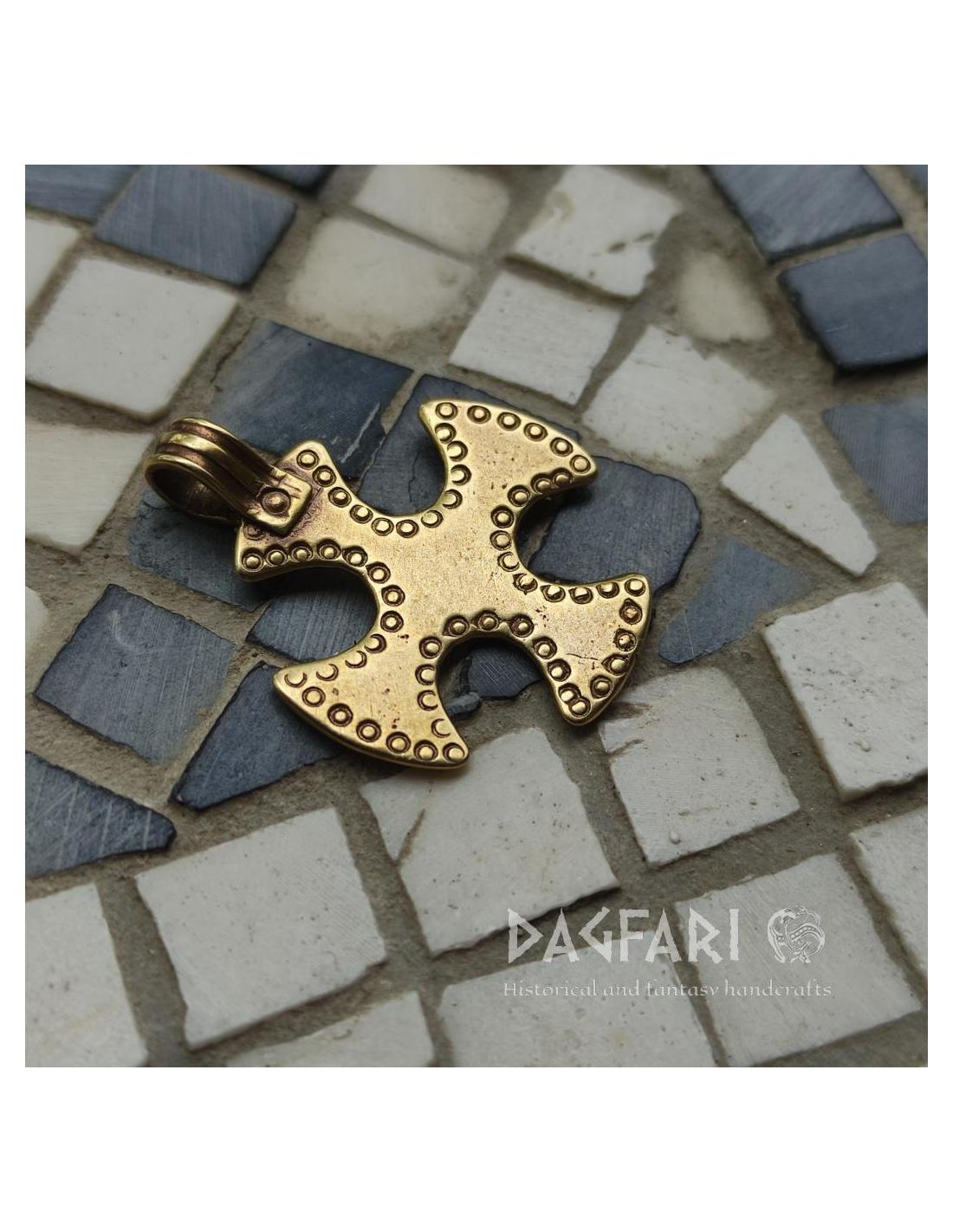
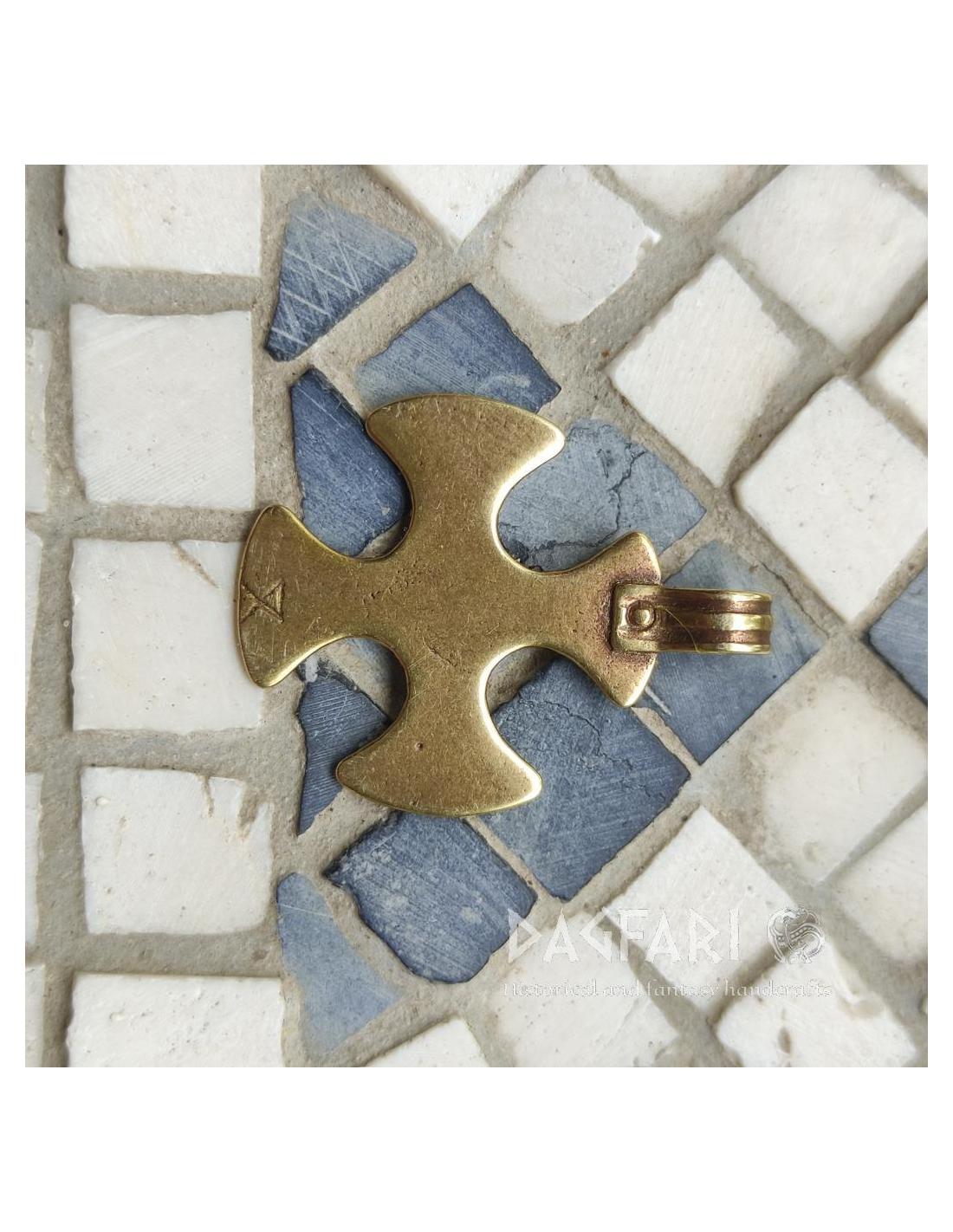
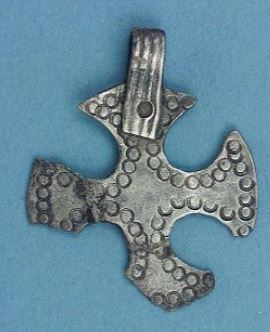
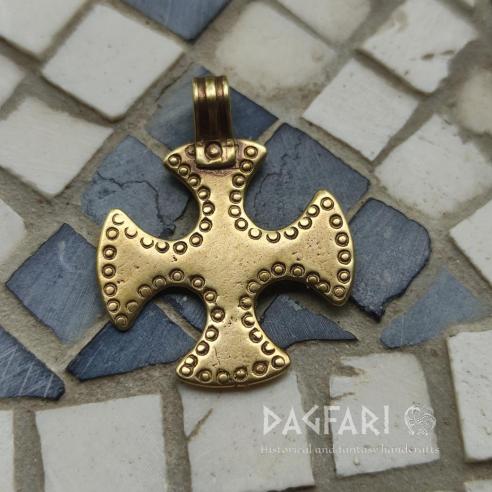
Birka replica, grave Bj. 517 – versatile use – can be silver-plated.
https://samlingar.shm.se/media/133D140F-5020-4877-914C-18027B0CA7C0
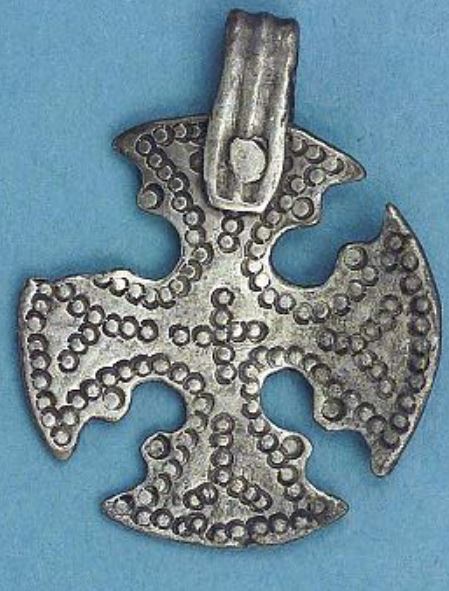
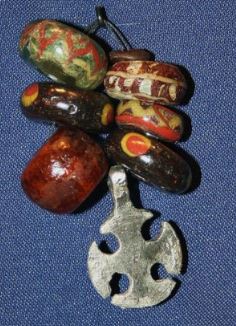
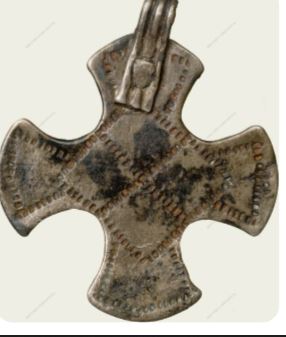
Christianization in Scandinavia began as early as the 5th and 6th centuries, yet it appears that it did not take root in Sweden until the 11th–12th centuries. It therefore appears that the symbols of Christian crosses, which traveled from the Byzantine Empire through Kievan Rus’ to Birka, belong to the culture of the Norse people more as an accessory and a symbol of the status of a “modern early medieval person” than as an expression of genuine faith in the Crucified Christ.
Crosses from the Viking Age are found in Birka in vast numbers. Birka was, in fact, a trading hub on the route between Scandinavia, Kievan Rus’, and Byzantium. As one of the first settlements in Sweden, it became a center for controlling trade and expeditions of warriors and merchants as they explored new trade routes. Common trade goods here included furs, bronze, walrus tusks, antlers, amber, and honey. Thanks to barter trade, we find everything here, from Byzantine jewelry decorated with granulation, silk, and brocades, to even the famous Buddha statue from India. It is therefore necessary to distinguish which pieces of jewelry are merely exceptional finds that arrived in Birka through trade, and which were in demand and became established locally. For example, the piles of Arab dirhams speak very clearly of trade with the Arab world, and these dirhams could be called a very popular import item.
3 g, 2.3 x 2.9 cm
You might also like


🌟 We ship packages once a week 🌟